Camera location and viewing angle
The selected location needs to support the intended field of view while remaining practical to mount, wire, service, and reach for future maintenance.

I Build Energy completed exterior security camera installation work at a commercial property on Freeport Blvd in Sacramento. The real project photos below show exterior camera placement, mounting, and surface-mounted conduit/raceway work in an operating commercial environment.
This page focuses on the physical installation and electrical/infrastructure side of a camera project. It does not claim alarm monitoring, cloud surveillance subscriptions, police-dispatch integration, or a specific recording/network configuration.
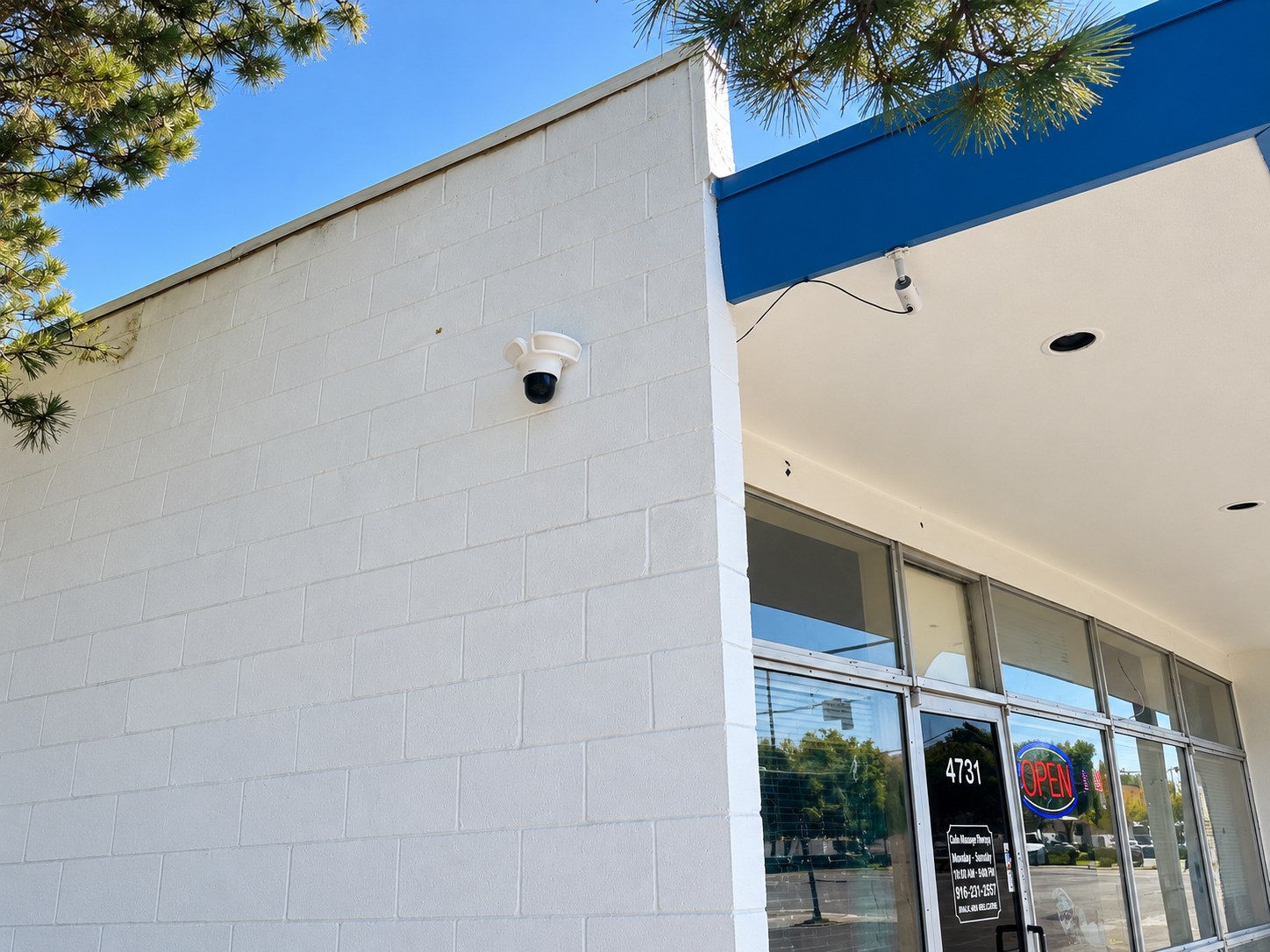
Commercial camera work is often less about the camera itself than the route, mounting conditions, exterior exposure, access, and how the wiring reaches the selected location cleanly. On this Freeport Blvd project, the photos document a commercial storefront environment, exterior mounting locations, work in progress, and visible surface-mounted conduit/raceway.
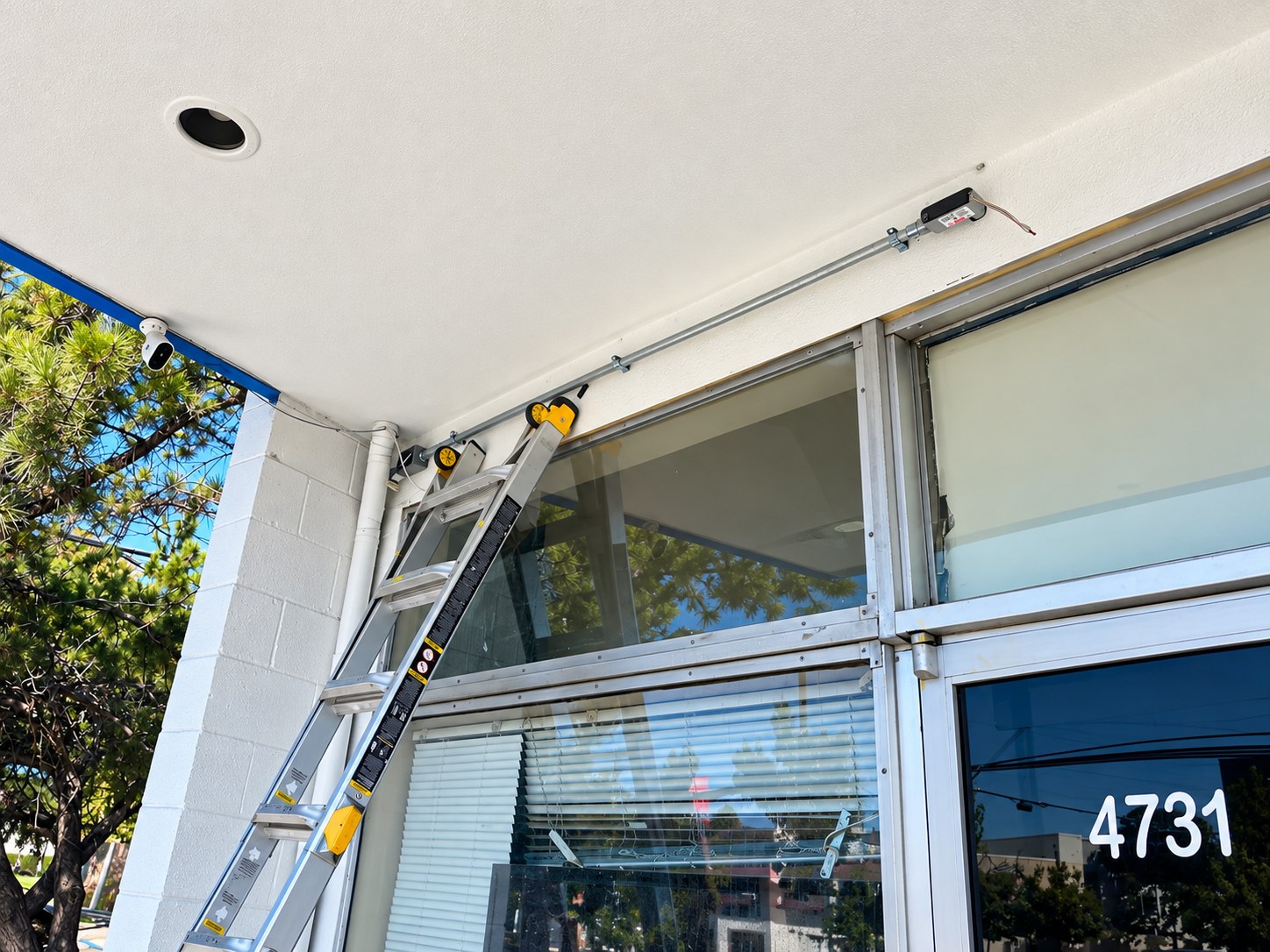
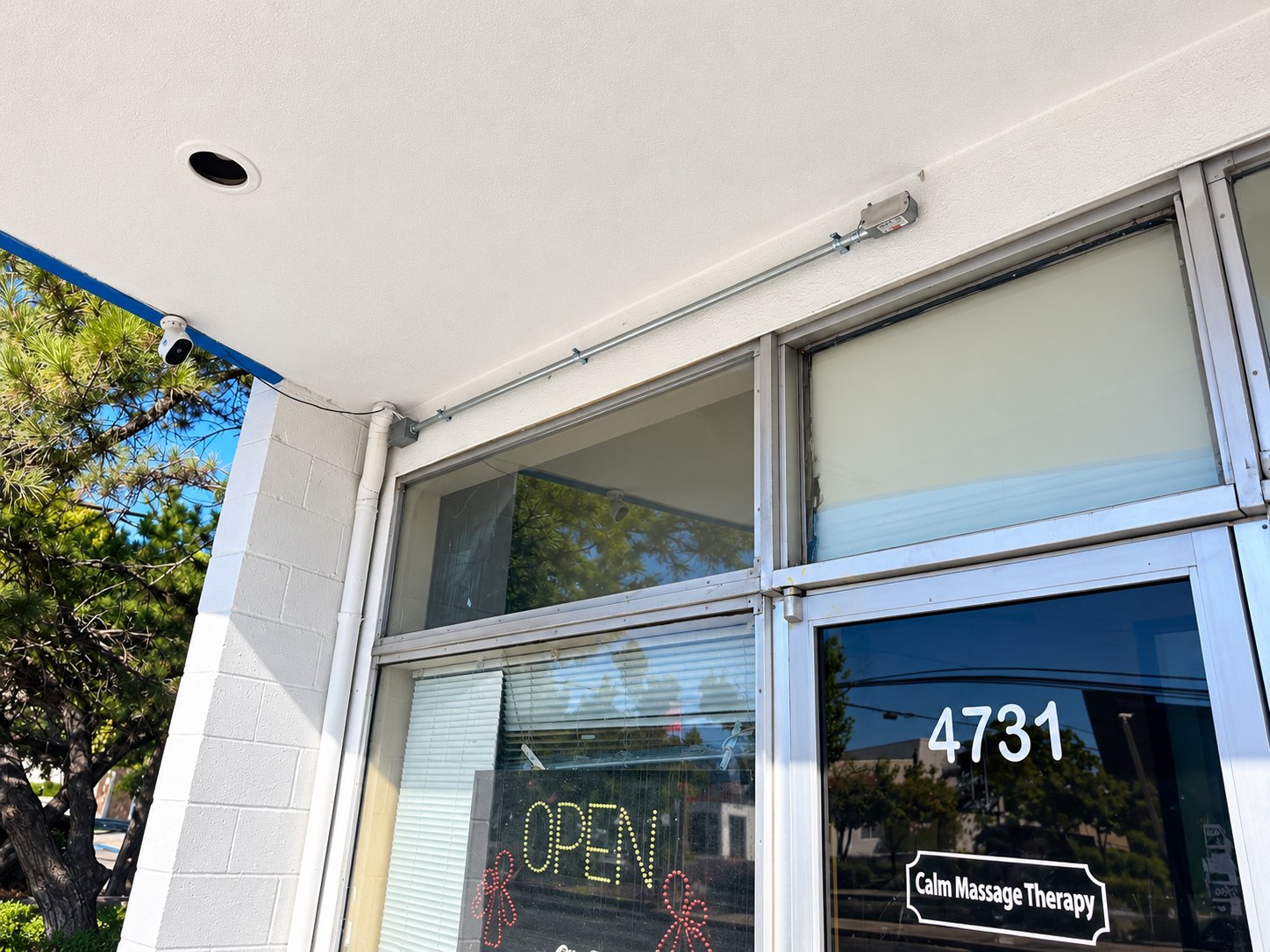
Exterior commercial work has to fit the actual building surface and route. A storefront with exposed exterior walls, openings, signage, doors, and other building features can require a different installation approach from an interior office or a new-construction rough-in.
For more first-party IBE project evidence, see Our Work.
The exact scope depends on the camera equipment, building, existing infrastructure, and who is responsible for the low-voltage/network side. Not every project needs every item below.
The selected location needs to support the intended field of view while remaining practical to mount, wire, service, and reach for future maintenance.
Stucco, masonry, siding, soffits, trim, and other surfaces can change the mounting method and pathway options.
Where wiring cannot be concealed or where added physical protection is appropriate, surface-mounted conduit/raceway may be part of the installation.
Routes may need to work around doors, windows, finishes, signs, roof edges, structural elements, and areas where future access matters.
Some camera systems need local power; others may use power delivered through low-voltage/data infrastructure. The equipment requirements should drive the plan.
Video/data cabling, network equipment, recording hardware, and system configuration are separate planning questions from the physical electrical pathway and mounting work.
If your project also involves broader outdoor power planning, see I Build Energy’s Outdoor Electrical Planning guide.
| Project layer | What to clarify before work begins |
|---|---|
| Camera equipment | Who supplies the cameras and what mounting, power, data, and environmental requirements the selected equipment has. |
| Electrical power | Whether local electrical power is required and whether existing electrical infrastructure is suitable for the planned equipment. |
| Low-voltage / data | Who is responsible for video/data cabling, network equipment, terminations, testing, recording hardware, and system configuration. |
| Conduit / raceway | Where a protected pathway is useful or required based on routing, exposure, building conditions, and project scope. |
| Mounting | The mounting surface, equipment bracket, access method, serviceability, and exterior exposure at each camera location. |
California contractor classifications separate different kinds of work. CSLB’s current C-10 Electrical Contractor definition covers electrical wires, apparatus, raceways, and conduits. CSLB’s C-7 Low Voltage Systems definition specifically includes energy-limited communication systems such as closed-circuit video systems. Electrical and low-voltage requirements for a specific camera project depend on the equipment, wiring method, and contracted scope.
California’s 2025 Building Standards Code is the current Title 24 code set for 2026. When a commercial camera project changes electrical systems or becomes part of a larger tenant-improvement scope, the applicable permit path depends on the actual work and jurisdiction. The City of Sacramento Permit Services page is the appropriate starting point for City properties.
Separate from building/electrical permits, Sacramento Police distinguishes ordinary video monitoring from alarm systems tied to police dispatch. The City states that residential or business video-monitoring devices that do not connect to or signal Sacramento Police Dispatch do not require an alarm user permit; professionally monitored systems that connect to or indirectly signal police dispatch do require an alarm user permit. See the City’s Alarm Permits guidance for the current rule.
The Freeport Blvd project is a commercial storefront example. Similar physical installation questions can arise at retail storefronts, offices, restaurants, service businesses, small commercial buildings, mixed-use properties, and properties managed for multiple tenants. The exact project still needs to be evaluated from the building, equipment, access, and wiring requirements.
Property managers can also review I Build Energy’s Electrical Services for Property Managers in Sacramento. For planned tenant improvements or broader infrastructure changes, use the Commercial Electrical Build-Out planning guide. Existing commercial electrical problems belong to the separate Commercial Electrical Repair & Troubleshooting owner.
Send Ivan the property location, photos of the proposed camera areas, and any camera/equipment information you already have. I Build Energy can review the physical installation, electrical, conduit/raceway, and mounting scope and identify what needs to be clarified for the low-voltage/network side.
Some camera projects include electrical power, conduit/raceway, mounting, and low-voltage/data work. California licensing scope depends on the work being performed. For this real IBE project, the documented scope is exterior commercial camera installation with visible mounting and conduit/raceway work.
Not every camera installation needs the same pathway. Conduit or raceway may be used where wiring is exposed, where added physical protection is appropriate, or where the building route makes a surface pathway practical. The correct method depends on the wiring, environment, and project conditions.
Yes, when the selected equipment and installation method are suitable for the actual exterior exposure. Camera documentation, mounting location, connections, routing, and future service access should all be considered.
Often, yes, but the existing building conditions determine the practical route. Finished walls, storefront materials, doors, windows, signs, ceiling access, available pathways, power, and network infrastructure can all affect the scope.
Surface-mounted conduit/raceway is one possible installation method and is visible in this real Freeport Blvd project. Whether it is appropriate for another property depends on the route, wiring method, exposure, building surface, and applicable requirements.
Permit requirements depend on the actual scope. Camera mounting alone, electrical changes, new circuits, conduit, low-voltage/data work, a larger tenant improvement, and professionally monitored alarm functions are not the same regulatory question. Confirm the project with the City of Sacramento and the applicable contractor before work starts.
Cost depends on the number and location of cameras, access height, mounting surfaces, wiring distance, conduit/raceway, existing infrastructure, equipment requirements, and the division of responsibility between electrical and low-voltage/network work. I Build Energy does not publish a one-size-fits-all price for this project type.